RPG production · Character and equipment acceptance
RPG Game Development: Agree the Character and Equipment Rules Before Expansion
Define one reproducible character and equipment sample before expanding RPG production.
An RPG game development brief should make one character build reproducible before it promises a large world. Agree the character’s starting definition, the equipment it may use, the order in which modifiers affect its attributes and the evidence needed to accept a change. A character screen is useful, but the commissioned result must remain consistent when equipment is replaced, removed or applied to another character.
This guide is for a producer commissioning a bounded Unity prototype. Our game development services cover scoped implementation and reviewed builds. An RPG proposal must still specify what is included: one character and a small equipment sample do not automatically include a campaign, writing, crafting, multiplayer or a managed backend.
Separate the character definition from the current character
Ask what describes a character type and what belongs to the individual character being played. A definition might contain its starting attributes and permitted equipment categories. The individual has its current equipment and other changing state. If several characters use the same definition, changing one character’s shield must not silently change the others.
Give every relevant definition a stable identifier. Display names can be edited; an item should not become a different item because its label was corrected. Record the configuration revision that the reviewer should use, alongside the build and starting state. Without that reference, a changed number can be mistaken for an implementation defect when the two reviewers are actually using different data.
Unity’s ScriptableObject documentation describes assets that can hold shared data independently of scene objects. This can support an authoring approach, but the choice does not itself establish correct equipment rules or saved player progress. Ask the team to show how shared definitions remain separate from mutable character state.
Define equipment permission before calculating its effect
Write which slot an item occupies and which characters may equip it. Decide what happens to the previous item, whether the same item may occupy multiple slots and whether the replacement is accepted immediately or requires another explicit action. These are product rules to agree, rather than details to discover during final review.
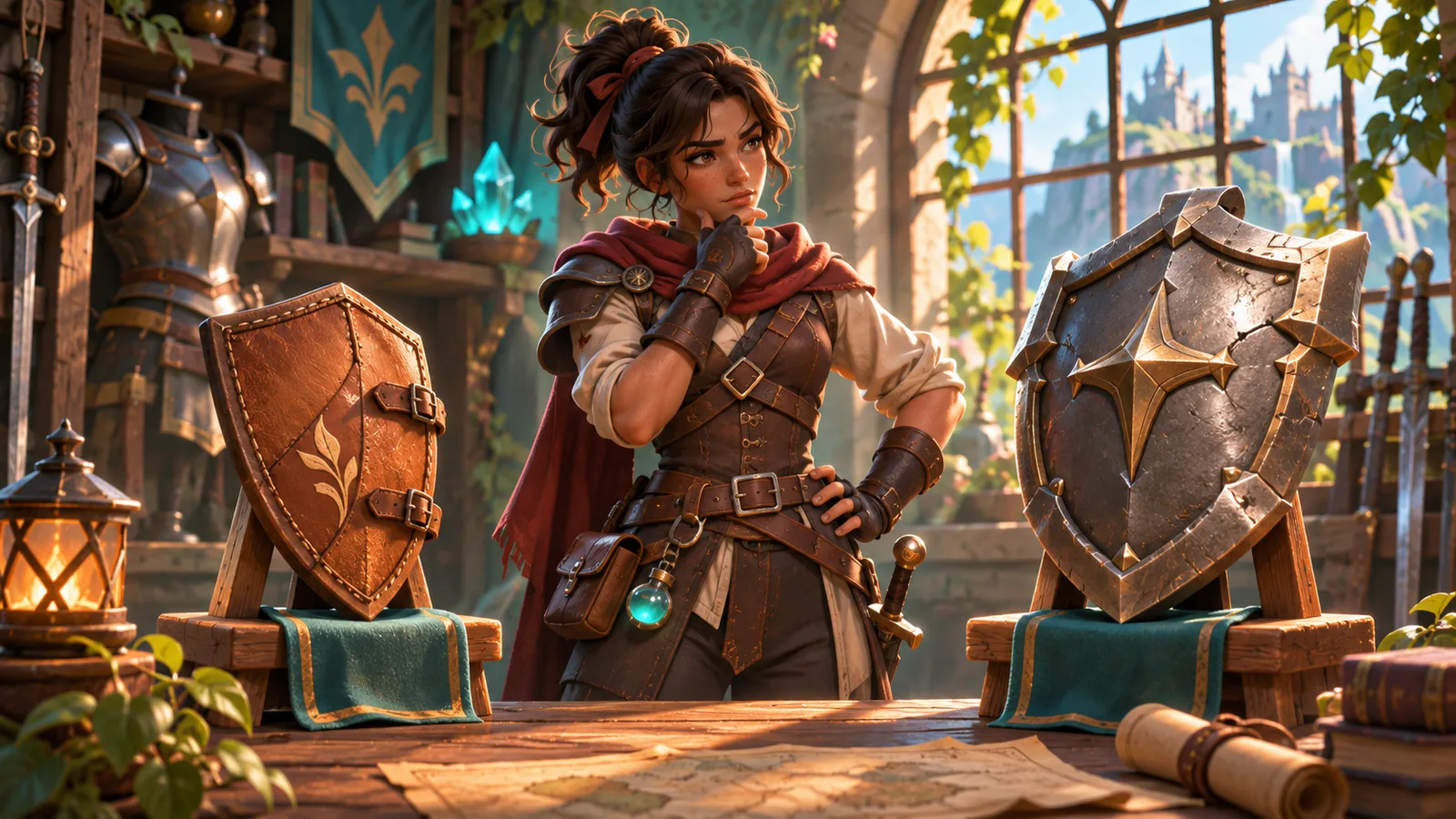
Consider a hypothetical scout with one shield slot. Its base guard value is 10. A light shield contributes 2 and a heavy shield contributes 5. These values explain the proposed review; they are not recommended balance values or a report from a completed client game.
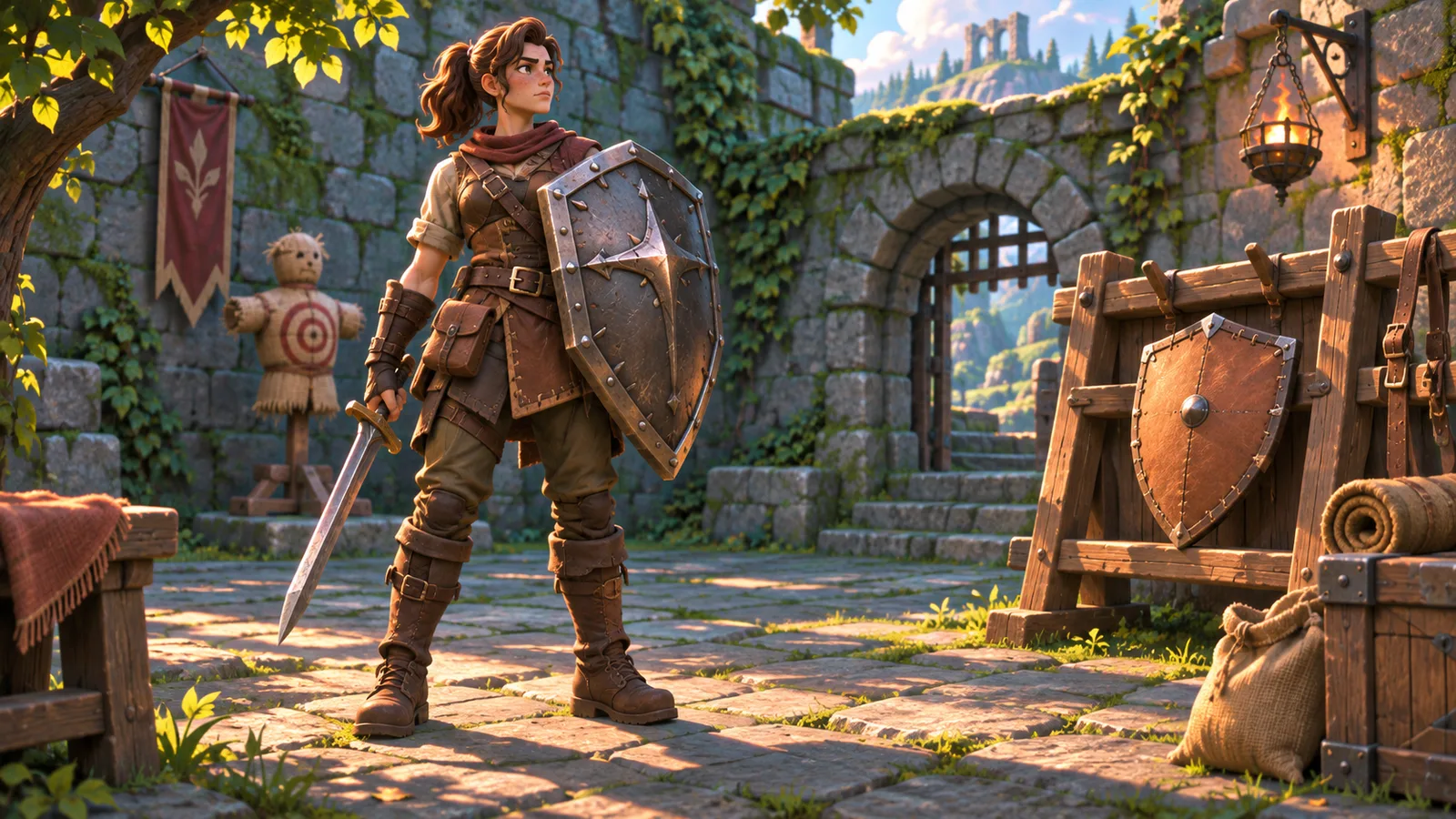
Equipping the heavy shield should replace the light shield’s contribution. It should not leave both modifiers active just because the old icon disappeared. Repeatedly selecting an already equipped shield must follow the agreed rule and should not accumulate an unintended bonus. An incompatible item should leave the accepted equipment state unchanged and give understandable feedback.
The adventure interaction guide covers using an item to satisfy an object prerequisite. Equipment is a different commitment: the selected item remains part of the character’s configuration and changes its derived attributes until that configuration changes again.
Make derived attributes explainable
Ask for a written calculation order. Additive bonuses, percentage changes, caps and temporary effects can produce different results depending on that order. The prototype does not need every possible modifier, but the implemented subset must be explicit. Do not accept an unexplained number simply because it looks plausible on the character screen.
For the scout example, keep the first rule deliberately simple: guard equals base guard plus the contribution of the single equipped shield. The expected values are therefore 12 with the light shield, 15 with the heavy shield and 10 without either. A later percentage modifier is a separate change whose order and rounding must be agreed before implementation.
Distinguish a configuration preference from a broken calculation. If the heavy shield correctly gives 15 but the producer wants 14, that is a balance revision. If replacing the light shield gives 17, investigate whether the old contribution was retained. Keeping those discussions separate makes estimates and review decisions clearer.
Review replacement and isolation from a known state
Use a named build, a configuration revision and two separate character instances. The following is a proposed fixture, with expected outcomes only. Actual observations and reviewer decisions remain to be recorded after running the prototype.
| Review | Expected result in the illustrative scout fixture | Evidence to record |
|---|---|---|
| Start unequipped | Guard10; no shield contribution | Build, configuration revision and initial state |
| Equip light shield | Guard12; one occupied shield slot | Equipment identity and displayed/current attribute |
| Replace with heavy shield | Guard15; previous contribution removed | Before/after equipment and recalculation |
| Select heavy shield again | No unintended stacking | Repeated action and resulting value |
| Remove shield | Guard10 | Slot state and recalculated value |
| Change the first scout | Second scout retains its own equipment and value | Both instance identities and observations |
| Reject incompatible equipment | Accepted state unchanged | Rejection feedback and state comparison |
An isolated calculation is not enough if the interface displays stale data. Review the equipment identity, visible attributes and the system that consumes those attributes together. If combat uses an old value while the panel shows the new one, identify the synchronization boundary. The combat acceptance guide owns attack and hit behavior; it should consume the agreed character state without redefining equipment calculation.
Keep adjacent systems in their own scope
Buying an item is different from equipping it. The economy design guide covers earning, spending and transaction constraints. A working loadout prototype does not prove that a purchase is charged correctly. Conversely, owning an item does not necessarily mean that it is currently equipped.
Persistence is another explicit boundary. If the character must retain equipment after closing the application, define the saved identifiers, configuration compatibility and recovery behavior using the Unity save-system guide. Do not describe an editor asset or an in-session screenshot as proof of persistence.
Our ROADFORGE case study provides context for original Unity game production and progression work. It is not an RPG case study or evidence that the hypothetical scout fixture has passed. Your sample should prove its own agreed rules before more classes, items or content are commissioned.
Receive a package that can be reviewed again
Request the reviewed build, source, character and equipment definitions, calculation order, starting fixture, revision notes and known limitations. Assign who may change configuration and which reviews must run after a change. Adding a new equipment category may need code and interface work; changing an existing permitted value may be a smaller configuration task.
Before approving expansion, ask the team to introduce one agreed equipment variation and repeat the relevant checks. That shows whether the system supports the intended authoring workflow. It does not prove unlimited content scale, every-device performance or a complete RPG release.
RPG game development questions
What should an RPG game development prototype prove about equipment?
It should prove permitted slots and item categories, replacement and removal behavior, the agreed modifier calculation and consistent results across the interface and consuming systems. Use separate character instances to check that changing one loadout does not unintentionally modify another.
Does a character configuration asset prove that player progress is saved?
No. An authoring asset describes configuration. Saving player progress requires a separate agreement for persistent character and equipment state, stable identifiers, compatible updates and recovery. Review application restart behavior in the agreed build rather than inferring it from an editor asset.
Discuss a bounded RPG prototype
Send your character roles, proposed equipment categories, example attribute rules, target platforms and any existing Unity project. We can review a limited implementation scope with a reproducible sample, explicit exclusions and agreed source handover before estimating wider production.
Explore game development services · Discuss your prototype · Send your RPG brief on WhatsApp