Adventure production · Commissioning decisions
Adventure Game Development: Commission an Interaction Chain, Not Just a Scene
Agree what players can inspect, collect and use—and what each action changes—before expanding the story into more rooms.
Short answer: an adventure game development proposal should define a connected interaction chain: the object a player notices, the condition required, the item or action used, and the observable result. Accept that chain in a playable sample, including unsuccessful attempts and reset behavior, before commissioning more scenes or story branches.
This guide is for a founder or producer commissioning a bounded Unity adventure experience. It is not an engine course or a promise to deliver an unlimited narrative world. Start with your approved story premise and interaction logic, then discuss a scoped Unity game development engagement that makes those decisions reviewable.
Choose one complete interaction chain for the first sample
A room count is a poor description of the first playable deliverable. One room can contain a decorative cabinet and a working door, or a network of dependent actions that changes every object in it. Ask which player decision the sample must demonstrate and where that decision ends.
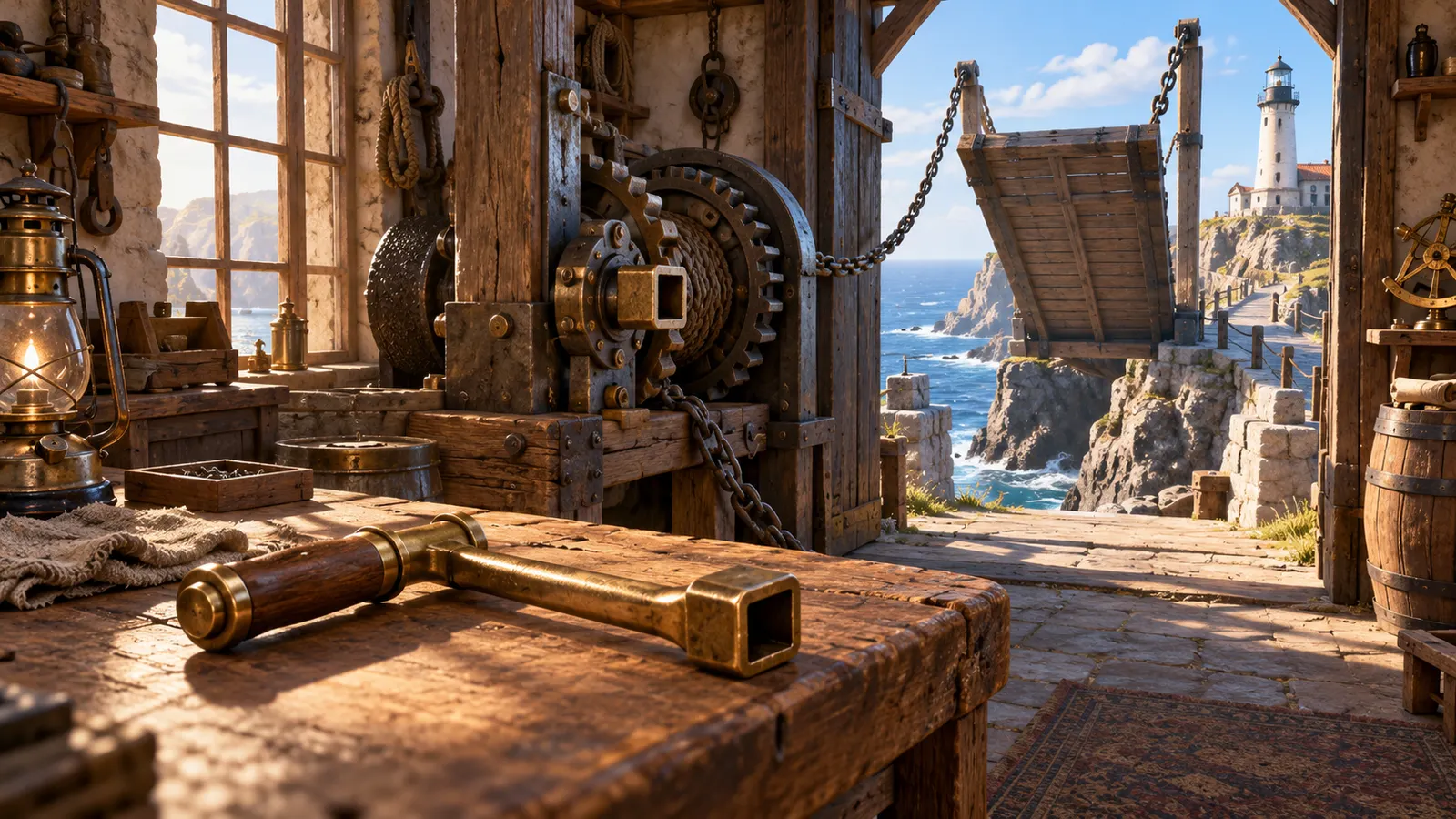
Consider a hypothetical project called Lighthouse Workshop. The player needs to cross a small drawbridge. A removable crank is on the workbench; the bridge winch has an empty socket. The player inspects the mechanism, collects the crank, selects it and fits it to the winch. Turning the fitted crank lowers the bridge and makes the route available. This is an illustrative scope, not a completed client title or a tested project result.
That small chain already establishes several deliverables: object selection, inspection feedback, carrying an item, valid item use, mechanism animation and a changed route. It does not silently include dialogue trees, a crafting system, combat, procedural puzzles or a full inventory economy. Name exclusions before requesting a price so different proposals refer to the same work.
Specify hotspots and prerequisites in player language
A hotspot is an object or area the player can interact with. For each one, record what makes it discoverable from the intended camera, which actions are available and which conditions change the response. An attractive model does not answer those questions by itself.
For the workshop winch, distinguish inspecting an empty socket from trying to turn it. Inspection can reveal the shape of the missing part. Turning without a crank should explain the missing requirement without lowering the bridge. Once the crank is fitted, the same action has a different valid result. The reviewer should not need access to the editor to understand the difference.
Agree the input method early. On a phone, an object must be selectable without relying on a mouse-hover cue. Decide whether tapping selects, inspects or immediately uses an object, and how the player cancels a selected item. Keep the decision consistent across the sample rather than leaving every hotspot with its own unexplained control scheme.
The game design document guide owns the shared rule-writing process. This interaction brief goes further into the dependency between specific objects: what must already be true, what changes now and which later action becomes possible.
Make inventory items useful rather than decorative
An inventory icon is not evidence that an item works. Ask whether the sample demonstrates acquisition, selection, use and the agreed outcome. Specify whether the item remains in inventory, becomes attached to the mechanism or disappears after use. A reusable key and a permanently installed crank should not accidentally follow the same removal rule.
The official Adventure Game Studio inventory reference distinguishes displaying an item from selecting it and using it on another game entity. That is a useful conceptual distinction for the buyer, not a claim that your Unity project uses AGS or inherits its implementation behavior.
For Lighthouse Workshop, agree that collecting the crank removes it from the bench and makes it selectable. Fitting it removes the carried item and shows it on the winch. Selecting another object must not accidentally retain a hidden crank selection. Those visible transitions are more useful acceptance evidence than a screenshot containing several inventory icons.
Review wrong actions as carefully as the solution
The ideal route can work while the puzzle remains confusing or breakable. Ask what happens when a player uses the wrong item, repeats a completed action, leaves during an animation or approaches the exit too early. Not every action needs custom dialogue; the required feedback and unchanged state should still be deliberate.
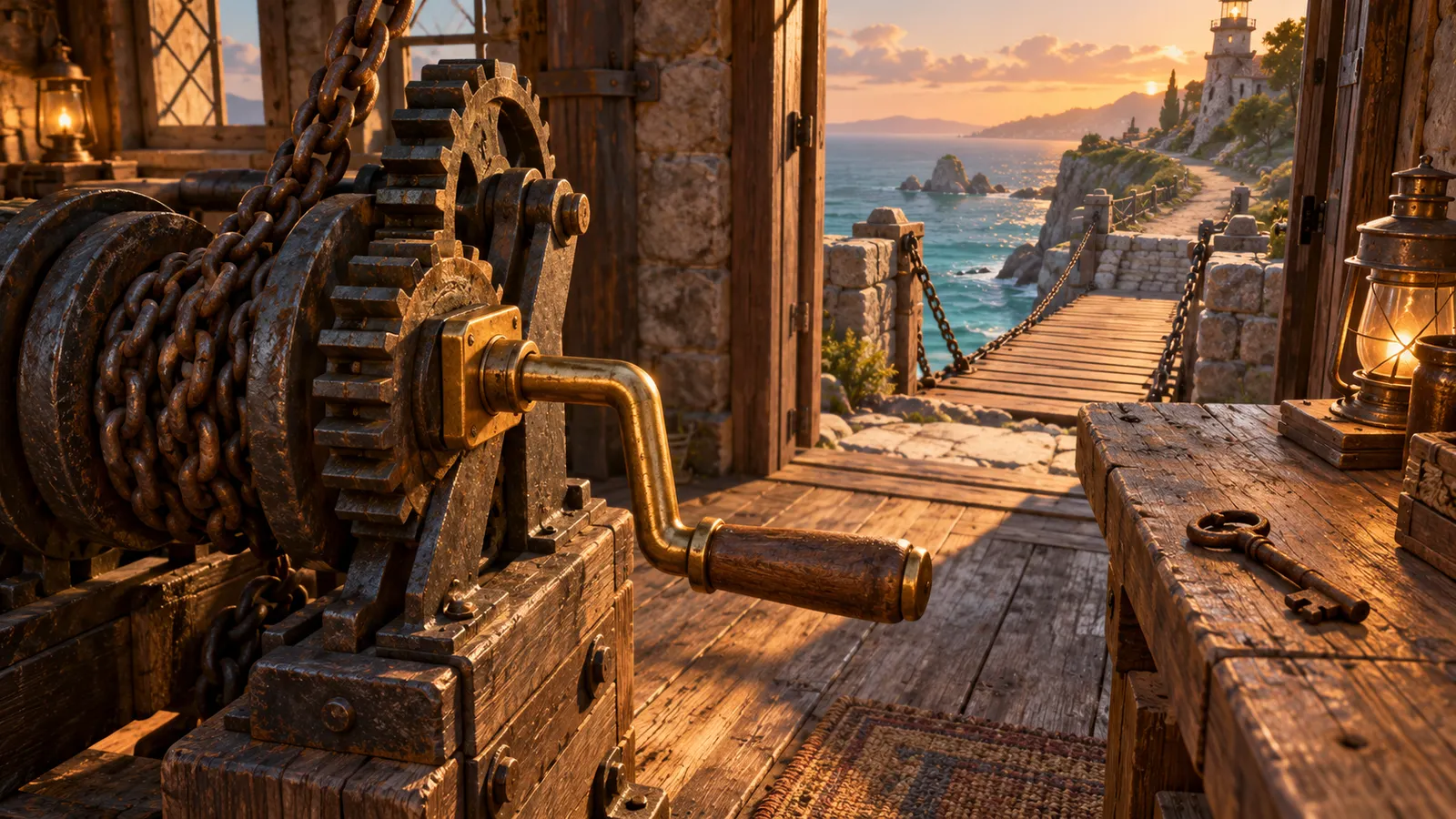
A rusty key could be a collectible item that does not fit this mechanism. Using it on the crank socket should not consume the key or unlock the route. Decide whether the response is a short message, a character reaction or a visible refusal. Avoid a silent failure that looks identical to a missed tap.
Repeated input also needs a rule. If the player taps the winch again while the bridge moves, the sample might ignore further input until the movement finishes. Whatever behavior is agreed, review it explicitly. The bridge should not end up halfway down while the route is treated as open merely because an animation started.
Use a small acceptance fixture before adding branches
Give the reviewer a known start state and a named build. The following fixture is a proposed review plan, not a passed test report. Record the actual observation and issue reference separately rather than pre-filling every result as successful.
| Starting condition | Attempt | Expected outcome |
|---|---|---|
| Crank still on the bench | Turn the empty winch | Missing-part feedback; bridge remains raised. |
| Crank collected and selected | Use it on the matching socket | Crank becomes fitted; it is no longer carried. |
| Wrong item selected | Use it on the winch | Clear refusal; item and bridge states remain unchanged. |
| Correct crank fitted | Turn once, then tap again during movement | One agreed operation; route opens only at the defined completed state. |
| Chain completed | Reset the sample | Bench, inventory, winch and bridge return to the agreed starting configuration. |
After a change, replay affected dependencies, not only the edited object. Moving the crank behind a locked cabinet introduces a new prerequisite. If that cabinet requires an item found beyond the bridge, the revised chain may become impossible. Review the order on paper and in the build before producing more finished scenery.
Scene reset and saved progression are different commitments. This fixture asks for a reproducible sample reset. If the commissioned game must retain solved puzzles after closing, define that behavior separately with the Unity save system acceptance guide. Do not assume a resettable demonstration proves persistence across application restarts.
Separate puzzle logic, level flow and finished art
Interaction acceptance asks whether the required tool and condition produce the right result. Game level design covers the broader route, player choices and pacing. Environment art makes objects and spatial relationships readable. These responsibilities overlap, but accepting one does not establish that the others are finished.
Our City Chomp 3D project page provides context for our Unity object behavior and readable mobile production work. It is an arcade project in development, not an adventure-game case study. A proposed adventure sample should demonstrate its own interaction requirements rather than borrowing proof from another genre.
Before approving expansion, request the reviewed build, hotspot and item list, dependency notes, reset instructions, known limitations and agreed source handover. Supply the story and approved interaction logic yourself unless additional content work is explicitly scoped. More rooms become a sensible next step when the connected behavior is clear—not simply when the first scene looks finished.
Adventure game development questions
What should an adventure game development sample demonstrate?
It should demonstrate one connected interaction chain with discoverable objects, clear prerequisites, usable items and observable outcomes. Include wrong-item feedback, repeated input and a reproducible reset. Agree the camera, controls, starting state and exclusions so the sample can be reviewed before more scenes or branches are commissioned.
Why is a finished adventure scene not enough to accept its interaction logic?
A finished scene shows appearance, not whether item ownership, prerequisites and dependencies work together. A playable review must establish that valid actions change the correct state, invalid actions preserve it and the next required step remains possible. Art approval and interaction acceptance should therefore be separate checkpoints.
Commission a reviewable adventure interaction sample
Send your story premise, approved object-and-item sequence, target platforms, visual references and available assets. We can discuss a bounded Unity engagement with a connected playable chain, review checkpoints, explicit exclusions and agreed source delivery.
Explore game development services · Discuss your game · Send the brief on WhatsApp