Audio assets · Creative scope · Unity handoff
Game Sound Design: Choose the Sounds Before You Expand the Budget
Choose the sounds that define your game, compare a representative sample and make the production responsibilities clear.
Game sound design starts with deciding what the player should understand and feel when something happens. Before commissioning a large sound library, agree the character of a few important actions, choose which sounds need original work and define what the game developer will receive. That gives an audio quote a useful scope: a particular set of sounds for a particular game, rather than an unexplained number of files.
A sound pack, a custom recording session and a playable audio system solve different problems. Your project may need one of them or a combination. The first decision is where a distinctive sound matters and where an existing, suitable asset will do the job.
What does game sound design actually include?
Sound design shapes the audible character of the game: the weight of an impact, the texture of a machine, the atmosphere of a place and the feedback attached to a player's choices. Riot Games' introduction to sound design describes its role in communicating events and decisions. A useful brief therefore explains what a sound means, as well as what makes it.
Consider the difference between a reward, a failed purchase and an important warning. All three could use a short electronic tone. They should not become interchangeable simply because they belong to the same interface. The designer needs to understand their meaning, urgency and relationship to the rest of the game.
Separate the assignments in your estimate. Creating sound effects, composing music, recording voices, preparing assets and connecting them to a game can involve different work and different people. Ask which of those responsibilities are included. The scope of an impressive audio portfolio may be much broader than the work your project actually needs.
Choose a library, custom sounds or a hybrid
Start with the game's identity and the importance of the cue. A familiar menu movement may not justify the same investment as a creature the player hears throughout the campaign. Equally, commissioning every sound from scratch can consume budget without resolving a weak or inconsistent direction.
| Route | When it can fit | What to clarify before committing |
|---|---|---|
| Existing sound library | A prototype or secondary sound family with a suitable, consistent source | Usage terms, selection, permitted editing, variations and who adapts the files |
| Custom sound design | A signature creature, unusual machine or recognisable set of interactions | Creative references, recording or synthesis work, sample approval and revision boundaries |
| Hybrid production | Distinctive central cues alongside adapted library material | Which cues are original, who matches the styles and how the sources are recorded |
A hybrid route can be a practical starting point: commission a distinctive robot movement and reward sound, then select compatible background and incidental effects. It is still a design assignment. Buying unrelated packs does not ensure their perspective, texture or intensity will fit together.
Use a small audition to decide the direction before expanding the catalogue. Approve the intended character of representative sounds, then use that reference when the remaining assets are produced or selected. This helps make later disagreements specific: an effect may be technically clean but sound too playful, too large or too aggressive for the scene.
Write a brief around actions, materials and meaning
“Metal impact” leaves important decisions open. Is it a light tool dropping onto a bench, a gate reaching its stop or a vehicle hitting a barrier? Describe the object, its size, what it is doing and how close the player should feel to it. Include a short gameplay capture or animation reference when one exists.
Then describe the role of the cue. Is it background texture, confirmation, a warning or part of a character's identity? State what must be recognisable when other sounds are present. References are most useful when accompanied by a reason: “the loose mechanical rattle suits this old machine” is more actionable than “make it cinematic”.
Agree a shared vocabulary for the first review. Words such as heavy, soft, dry, hollow or restrained are starting points, not objective measurements. Listen to a representative sample and record what each word means in this project. A short approved reference can prevent a long chain of contradictory written feedback.
Keep the underlying game rules in the game design document. The sound brief should explain their audible presentation. Changing the sound of an accepted action should not quietly change which action the game accepts.
Example: give a salvage workshop its own sound palette
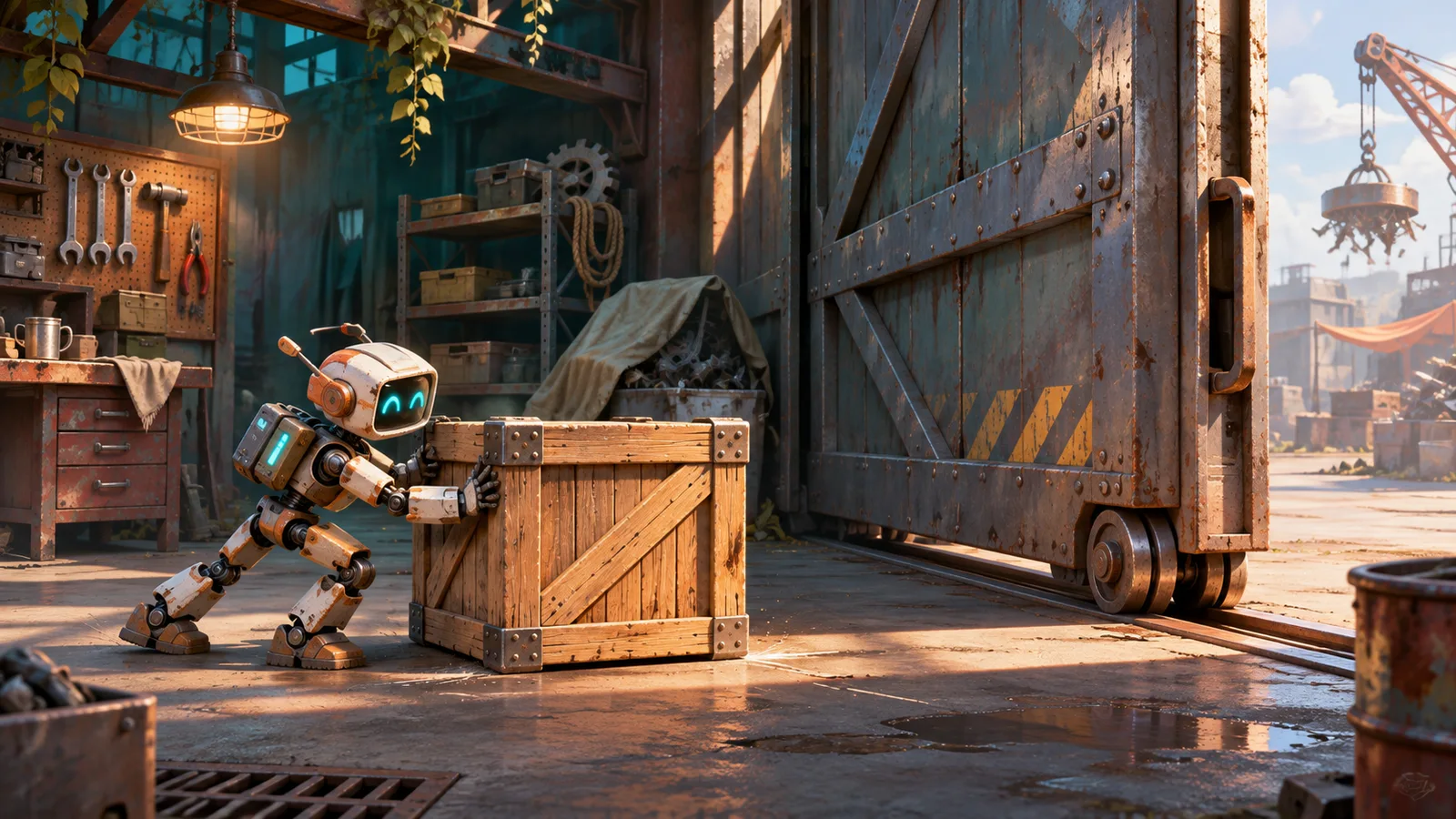
Imagine a small game in which a repair robot moves packing cases and opens an old workshop gate. This is a hypothetical production example. The visual scene contains wood, light mechanisms and heavy steel; treating every collision as the same dramatic crash would blur those differences.
The first audition could cover three representative families:
| Family | Creative direction to discuss | Useful review question |
|---|---|---|
| Wooden case movement | Short scrape and contact with a modest sense of weight | Does the sound fit a case the small robot can move? |
| Robot movement | Light mechanical texture that supports its character | Does repetition make the character tiring or distracting? |
| Steel gate movement | A heavier motion with a recognisable start and finish | Can the player distinguish movement from the gate arriving at its stop? |
These are proposals for a review, not recorded test results. The owner and designer can audition different interpretations against the same reference scene. A comic robot and a tense survival game could use similar objects but require very different sound palettes.
Once the direction is agreed, identify the remaining variations. Several crate contacts may belong to one family; a new reward notification has a different meaning and deserves a separate decision. This is a better basis for an asset list than counting every exported variation as an unrelated creative task.
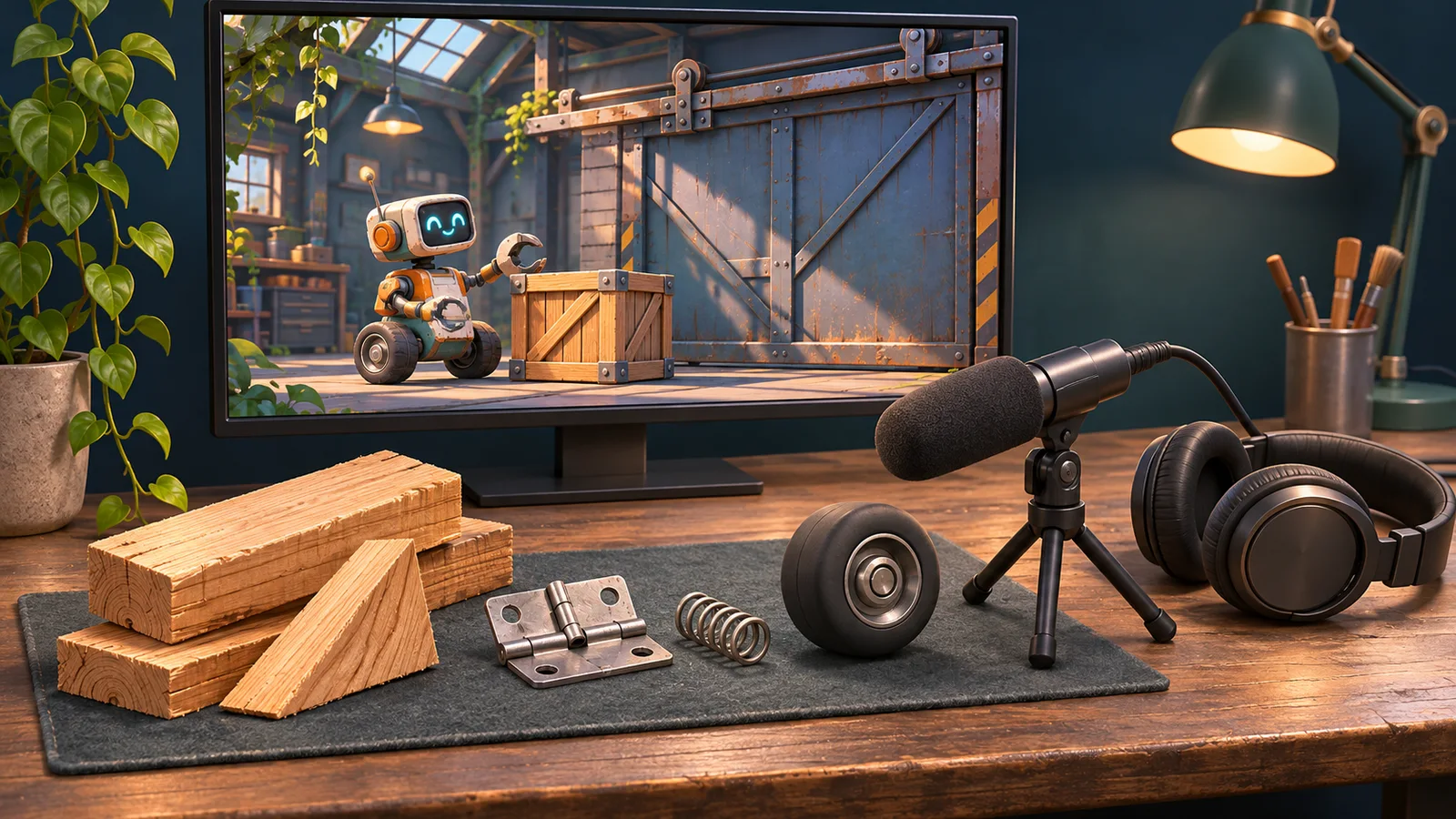
Review the sound in the scene, rather than only in a playlist
A playlist is useful for hearing detail. It does not tell you whether the chosen sound fits the animation, camera and surrounding feedback. Ask to hear the proposed cues against a consistent reference sequence. If the game already runs, use a bounded playable scene; otherwise label the review as a video audition with its implementation still to come.
Compare alternatives at a consistent listening level. A louder option can seem more impressive without communicating the action more clearly. Discuss the start of the action, its sustained character where relevant and its ending. For repeated actions, listen to a sequence long enough to notice whether the variation is useful or merely distracting.
Give feedback against the brief. “The gate sounds too light for its scale” identifies a creative problem. “The gate sound continues after the gate disappears” identifies an implementation problem. Routing those findings to the right owner avoids paying for a new recording when the asset itself was not the issue.
Define the handoff before the asset count grows
Request an inventory that identifies each cue family, its approved version, intended use and source. Make the distinction between editable working material and delivery exports explicit. If future editing is part of the commission, agree what working files and dependencies the recipient actually needs; do not assume a folder of rendered clips includes them.
Useful handoff questions include:
- Which sounds are one-shot effects, and which need a prepared loop or separate start and ending?
- Which variations belong together, and which files are alternatives that should not ship together?
- Who supplies the asset-source and usage record, and who checks it against the planned distribution?
- Who prepares the final exports, and who chooses the Unity import settings for the target build?
- What changes count as correcting an approved cue, and what changes reopen the creative direction?
Unity's Audio Clip import reference treats sampling, compression, loading and platform overrides as configurable decisions. Agree the receiving project's requirements with the implementation team instead of assuming one universal export preset. Keep this record with the wider game-project handover.
Music and dialogue deserve their own scope when needed. A request for sound effects does not automatically include a soundtrack, voice casting, recording or multilingual performance. Confirm those responsibilities before using them to compare two quotes.
What changes the estimate?
The relevant factors are the number of distinct cue families, the amount of original creation, the quality of the supplied references, variation and looping needs, editing requirements and the number of review decisions. Creating a new creature's voice is different from adapting an approved interface click, even if both finish as one file.
Changes to the game can also change the assignment. A new animation, a heavier-looking object or a different tone may invalidate an approved sound direction. Record which scene and reference supported the approval so the team can explain the effect of a change. This makes an estimate easier to discuss without inventing a universal price per sound.
Before commissioning the full set, ask for a representative first delivery: agreed references, a small selection of cue families, the review context, the asset-source record and a clear decision on what happens next. The purpose is to resolve creative uncertainty before multiplying production work.
Connect the approved sounds to your Unity project
Upload For Software scopes Unity development and the integration of approved sound assets into playable systems. Original recording, composition and voice production need explicitly assigned responsibilities; our implementation work does not by itself establish those specialist services.
If you have a game concept or an existing build, send the platforms, representative gameplay, available audio assets and the cues that still need a direction. We can discuss the implementation boundary and the review build alongside the wider game scope. Our game audio implementation guide explains the next step: events, playback ownership, player controls and in-build review after the assets have been chosen.
Explore Unity game development services, describe your project, or send your brief on WhatsApp.