Commissioning an interactive learning activity
Educational Game Development: What to Commission Beyond a Quiz Screen
Connect approved subject content to a player decision, explanatory feedback and a reviewable activity before expanding the lesson library.
Short answer: commission educational game development around one approved activity: what the learner must decide, what action expresses that decision, how the game explains the result and what counts as completion. Name the content reviewer separately from the implementation team. Accept a representative playable activity before multiplying lessons, and keep educational effectiveness separate from software acceptance.
If you are a publisher, museum or content owner hiring a development team, the first question is practical: what will your audience actually do with the content? A useful proposal connects that action to the rules, interface, content updates and playable build you will receive. Our Unity game development services provide the implementation route; this guide helps you prepare and compare that scope.
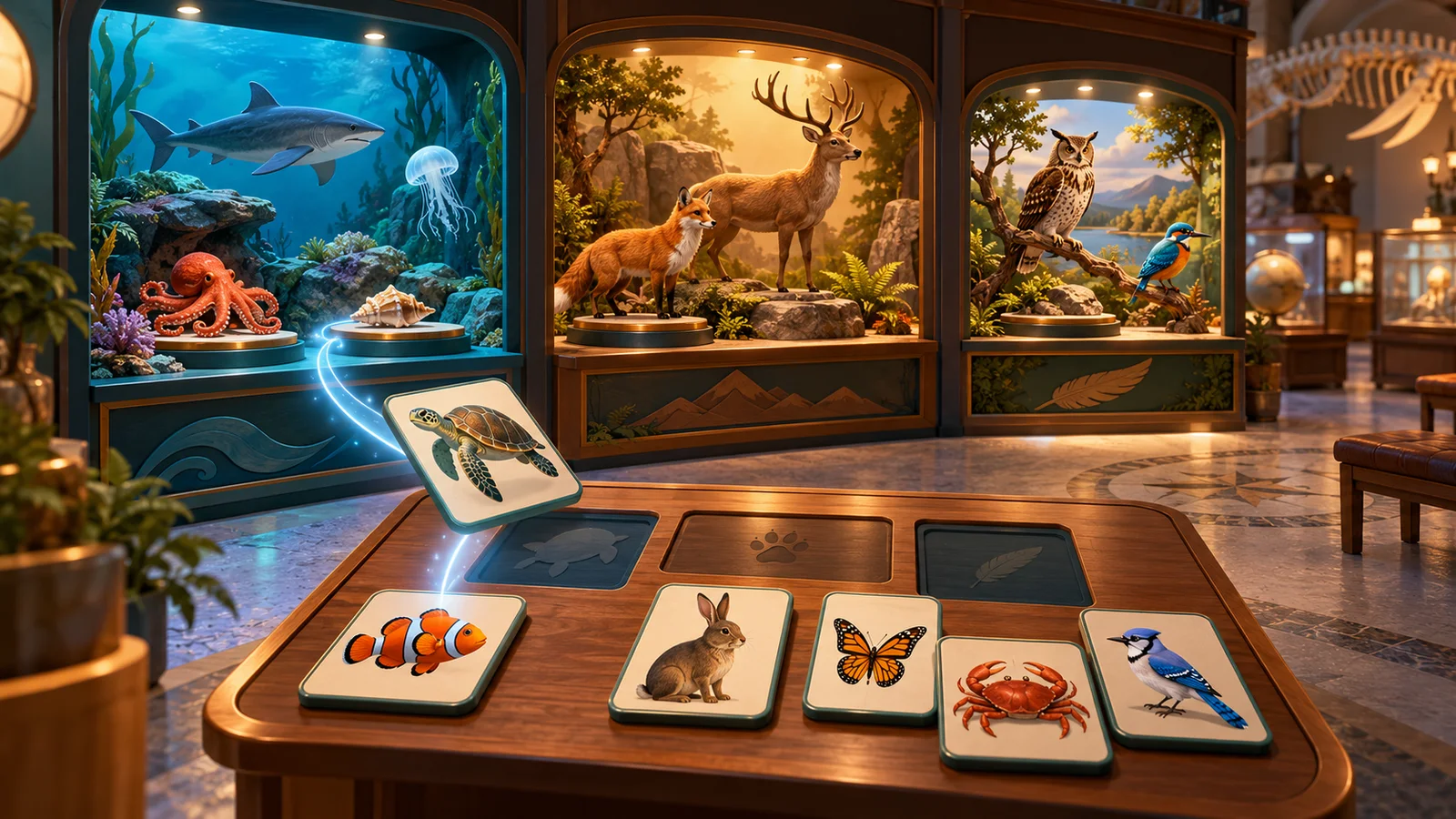
Start with the decision, not a list of screens
“An educational game with ten lessons” describes quantity but leaves the interaction undefined. Choose one activity and write what the learner is expected to distinguish, arrange or apply. Then name an observable action: selecting an item, ordering steps, matching a property or placing an object. A welcome screen, score counter and completion badge do not specify that relationship.
For an illustrative museum activity, imagine sorting objects by a curator-approved property. The curator supplies the object set, classifications and explanations. The player inspects an object and chooses a category; the game responds using the approved reason. This is a hypothetical scope example, not a completed client project or evidence of improved knowledge. Its purpose is to make the commissioning decisions concrete.
A worked brief: turn a museum collection into a playable sorting activity
Here is an illustrative first milestone for a museum content owner. The activity uses six object cards and three curator-approved categories. These quantities define this example, not a recommended lesson size or a promise about learning. Each card has an image, a short description, an approved category and an explanation supplied by the content reviewer.
The player opens a card, examines its details and selects a category. On an incorrect choice, the object stays available and the explanation points to the property to inspect. On an accepted choice, the card joins the completed set. The round ends only after all six cards have been placed under the agreed rules. A separate review case covers leaving the activity after three accepted cards and returning.
| Decision | Example specification | Why it changes implementation |
|---|---|---|
| How to answer | Tap a category; allow changing the selection before submission. | Selection and submission are different states, not a single irreversible tap. |
| An incorrect answer | Keep the same object, display its approved explanation and offer retry. | The system must not advance the round or mark the card complete. |
| An accepted answer | Move the card to the completed set and enable the next object. | Progress must reflect the specific card, not only a total score. |
| Returning later | Restore completed cards and reopen the current object without a pending selection. | Saving progress and saving temporary interface state are separate choices. |
| Content correction | A changed category requires a new content revision and a decision on existing progress. | A text update can affect answer validity; it is not always just a label edit. |
The first review should include both the correct and incorrect paths on the agreed target device. Ask the team to supply the playable build, the content revision it uses and a short list of unresolved decisions. The milestone is useful when the client can try the whole activity and identify a mismatch precisely—not when a presentation says that the interface is finished.
Choose an interaction that fits the approved content
A quiz is a reasonable choice when selecting an answer is the action you need. Other content may call for a different interaction. Compare the actual player decision before choosing the screen format:
- Classification: inspect an object and assign it to an approved category. Define overlapping categories and ambiguous examples.
- Sequencing: place steps in order. Specify whether several orders are acceptable and how the game explains a broken dependency.
- Assembly: connect parts into an agreed arrangement. Define valid connections, incorrect placements and the point at which the arrangement becomes complete.
These are implementation options to scope with the content owner, not claims that one format teaches better than another. Start with one interaction. Adding a second activity type may require new rules, interface states, art and review cases even if both appear under the same lesson title.
Write an activity card both reviewers can use
Give the activity a stable identifier and content revision. Record the audience, assumed reading ability, allowed interaction, object set, correct relationships, acceptable alternatives and explanation for each result. Decide whether an object can fit more than one category. If the content owner has not resolved an ambiguous case, flag it instead of letting a programmer silently choose an answer.
Separate the subject statement from its presentation. An explanation may be approved while its label is too long for a phone or its image is difficult to distinguish. Supply the actual text and asset references early, including usage rights. The game design document guide explains general behavior specifications; the activity card adds a traceable connection between approved subject content and the learner action.
Make feedback explain the choice
Define what happens after an incorrect, incomplete and accepted action. A red flash says the attempt was rejected, but it may not explain the property the player should inspect. Ask the content reviewer to approve the reason shown and the implementation reviewer to confirm when it appears. Keep the wording and the trigger connected in the card so a correct sentence cannot accidentally appear after the wrong event.
For the museum example, a rejected category could highlight the relevant object property and offer another attempt. Decide whether the next attempt uses the same object, a hint, or another example. Choose whether an answer becomes visible immediately or only after a defined sequence. These are product choices, not universal teaching rules. Avoid presenting a particular feedback pattern as scientifically proven without a suitable evaluation.
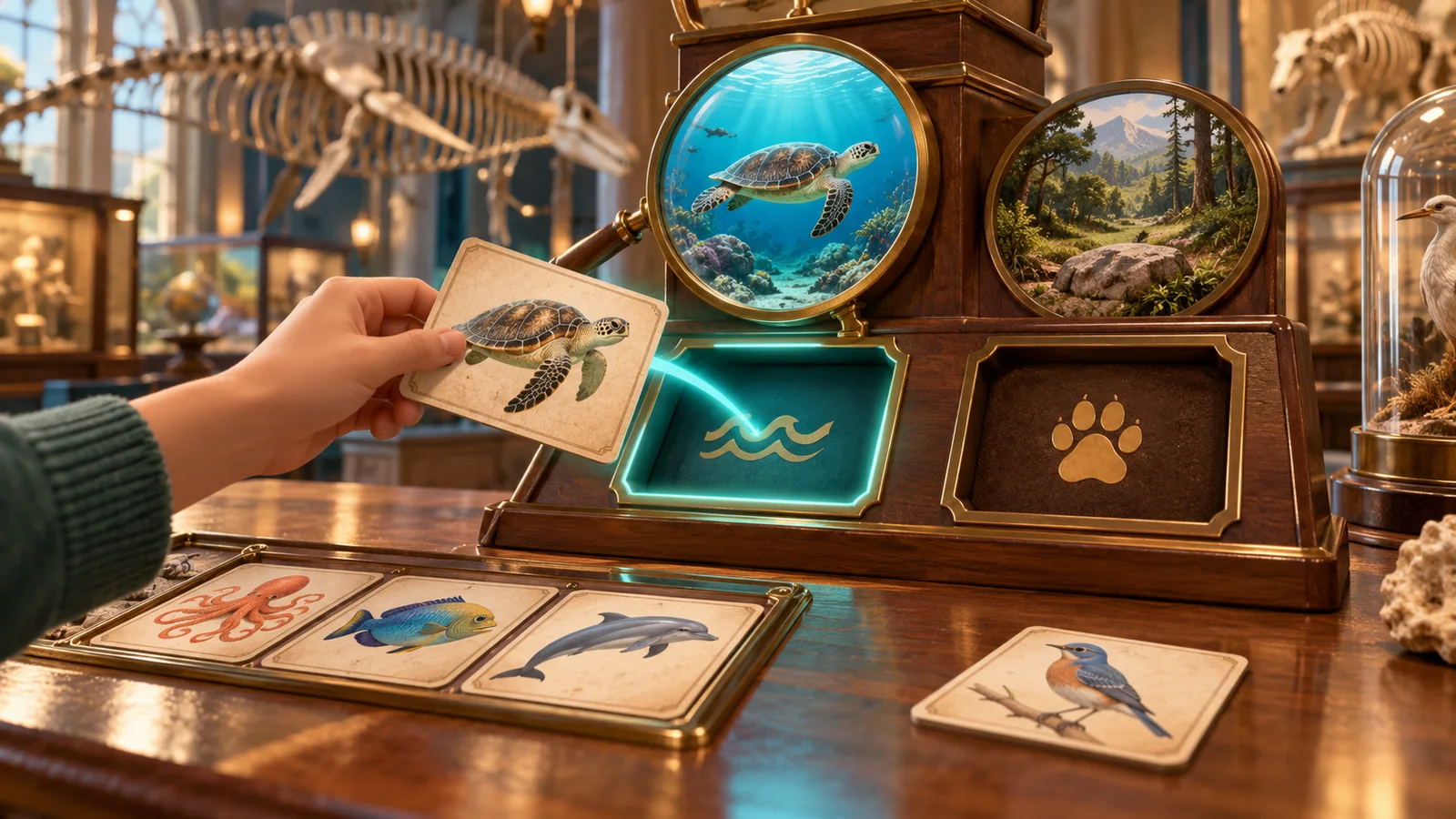
Separate completion from a score
A score is a computed value; completion is a rule. Specify whether the learner must classify every object, correct an earlier mistake, finish an uninterrupted route or simply attempt each item. Decide how hints and retries affect the result. Otherwise the score screen can look convincing while several different implementations disagree about whether the activity was actually completed.
Record the state transitions that matter: not started, active, response shown, retry available and completed, for example. An interruption needs an agreed return path. Does the game resume at the same object, repeat the explanation or restart the activity? If progress persists, identify the fields and supported cases. Do not assume that saving a total score also preserves the context required to continue the activity.
Commission one representative activity before the library
Choose a sample that exposes the real content constraints, not only the shortest label and easiest answer. Include a representative object, a confusing alternative, the longest expected explanation and the agreed interruption path. Temporary art can be appropriate if it preserves the visual distinctions the activity requires. If colour or image detail communicates the answer, an arbitrary placeholder may hide the actual review problem.
The casual production guide covers proving a repeatable playable loop. Here the extra gate is whether the same content mapping survives a second approved example without changing the rule by accident. Review a content variation before ordering a large library. State which fields the content owner can revise and which changes require development, such as introducing a new interaction or a different completion rule.
Review content correctness and software behavior separately
| Review case | Expected evidence | Approval owner |
|---|---|---|
| Correct classification | Approved property, explanation and content revision | Subject-content reviewer |
| Incorrect choice | Agreed response, retry and unchanged completion state | Implementation reviewer, with approved copy |
| Interrupted activity | Documented resume or restart behavior in a named build | Implementation reviewer |
| Content variation | Second approved example follows the same mapping | Both reviewers within their responsibilities |
Record the build, device, activity ID, content revision, starting state, attempted action, expected result and actual observation. Leave the observation blank until someone runs the case. Content approval does not prove that the implemented answer is wired correctly. Conversely, a technically correct mapping does not prove that the underlying explanation is accurate or that learners benefit from it.
Keep learning claims and data collection outside assumptions
If the project needs evidence of learning effectiveness, agree who designs and conducts that evaluation and how its findings change the product. A developer can demonstrate that an activity behaves as specified; that is not an effectiveness study. Do not treat a completion percentage, repeat play or time spent as proof of a learning outcome.
Unity Learn's design-document tutorial recommends planning early player feedback rather than relying on a design reference alone. That supports reviewing the actual interaction; it is not evidence that this hypothetical activity teaches effectively.
Identify whether the first version needs accounts, analytics, learner records or any online service at all. These add separate implementation, ownership and policy questions. A local activity need not silently become a learner-management platform. Where personal data or children are involved, the owner must obtain appropriate specialist review; this guide does not establish compliance or provide legal advice.
Receive an updateable implementation, not a frozen demonstration
The handover should identify the Unity version, source project, approved content inventory, asset rights, configuration fields, build instructions, known issues and review evidence. Include the relationship between activity IDs and content revisions. Document how a corrected classification or longer explanation enters the next build and which existing activities need regression review.
Our ROADFORGE case study demonstrates connected Unity gameplay, interface, progression and device-build work. It is not an educational client reference or proof of the museum example above. A new learning activity still needs its own scoped implementation and acceptance evidence.
What to send before requesting an estimate
- The intended audience, language and target platform.
- One complete content example: image, prompt, accepted answers and explanations.
- The desired interaction and the rule for finishing the activity.
- Whether progress must survive closing the application.
- Who approves subject content and who supplies licensed assets.
- How often content changes and whether a client-editable workflow is required.
These inputs let a team distinguish a fixed activity from a reusable activity system. If the content is still being written, identify the missing items before comparing estimates. For the commercial discussion, use the design reference to record behavior rather than expanding a feature list without decisions.
Scope the first activity with a development team
Send the audience, one approved content example, intended player action, platforms, available text and assets, content reviewer and expected update process. We can discuss the playable boundary, feedback states, review build and source handover before expanding production.
Review game development services · Request a scoped estimate · Discuss your activity on WhatsApp
Questions before commissioning
What must a client provide for educational game development?
Provide the intended audience, approved subject content, one representative activity, answer relationships, explanations, available assets and rights, target platforms and a named content reviewer. Agree who resolves ambiguous content and approves future revisions; software implementation does not replace subject expertise.
How can I accept an educational game without relying only on its score screen?
Review a named activity and content revision in a specific build. Check an accepted action, incorrect choice, explanation, retry, completion condition and interruption path against agreed expectations. Record actual observations separately from content approval and any educational-effectiveness evaluation.