Map the player decisions
List the screens, inputs, information priorities and transitions. Identify what the interface must communicate during normal play, interruption, failure and return.
Game interface design + Unity implementation
Commission the interface as part of the playable game, not as disconnected screens. Upload For Software scopes mobile-game HUDs, menus, progression maps and workshop flows with the Unity behavior, device layout and handover needed to make them work in a build.
Scope the actual work
A strong interface scope starts with the decisions players make: where to steer, when to spend a resource, how to read a threat, and how to recover from a failed action. Depending on the existing project, the engagement can cover:
We define the screens, target devices and acceptance criteria before estimating. A single HUD pass is not priced or scheduled like a complete interface system.
From screen to build
List the screens, inputs, information priorities and transitions. Identify what the interface must communicate during normal play, interruption, failure and return.
Review a representative path in context—such as earning a reward, opening the workshop, spending it and returning to combat. Agree what is visual feedback and what is committed game state.
Connect screens to the real Unity systems, then check touch overlap, safe areas, readability, state persistence and return paths on the agreed device set. Record remaining limits instead of implying universal coverage.
First-party game evidence
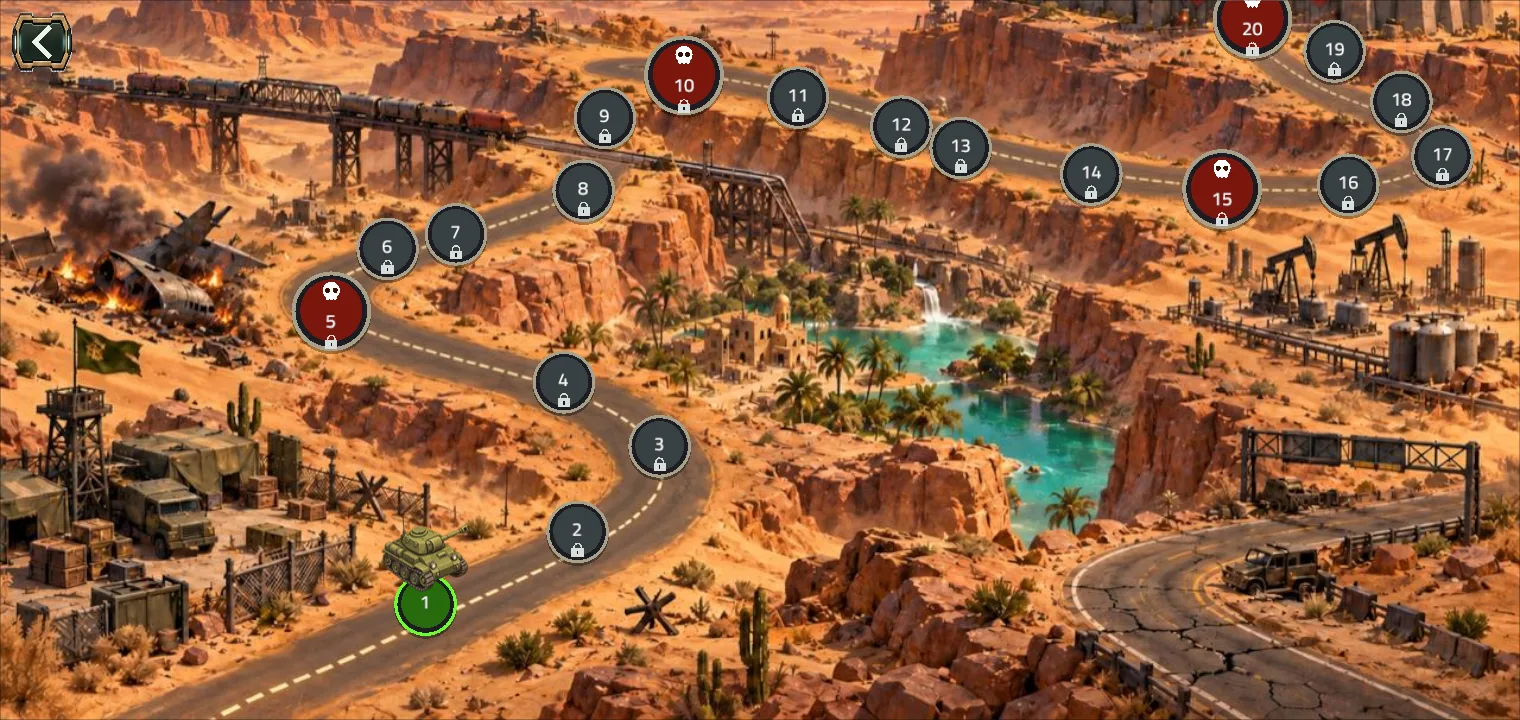
ROADFORGE is our original Unity mobile-game case study. Its 20-stage campaign map makes progress and boss milestones visible. In combat, health, objective and immediate controls take priority; in the workshop, the player compares units, ranks, prices and equipment around a live 3D model.
The saved wallet and the HUD use the same game state, so an animated counter cannot independently grant or spend currency. That is an implementation boundary as much as a visual decision. The case study documents physical Android checks and their limits; it does not prove every device or a standalone UX-research programme.
A useful request brief
Share your platform, genre, current build or prototype, target devices, intended player, languages, screen list, style references and the Unity systems already in place. Include the decisions that currently confuse players, not only screenshots you like. If the project is live, tell us which flows must remain compatible with existing saves, purchases or analytics.
We can then propose a bounded first milestone: the screens and states to deliver, the playable route that proves them, the device checks, file formats, review rounds and source-handover items. The estimate follows that scope rather than a generic per-screen promise.
If you need the entire game rather than an interface-focused engagement, see our full-cycle game development services.
Start with a playable decision
Send the current build or a concise project brief. We will identify the first interface flow worth proving and what acceptance evidence you should expect.